

Can You Install Radiant Floor Heating Under Porcelain and Natural Stone Tile?
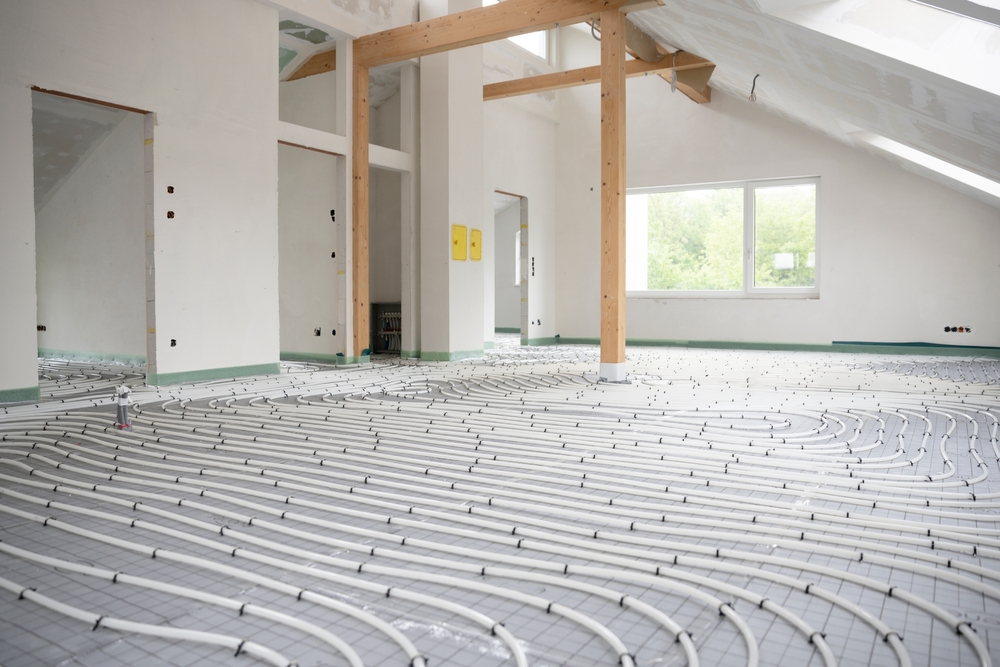
For homeowners in Bend, OR, and across Central Oregon, where temperatures can drop well below freezing, heated tile floors are more than a luxury. They are a practical upgrade that transforms how a home feels from the ground up. The good news is that yes, you can absolutely install radiant floor heating under both porcelain and natural stone tile. But the success of that installation depends on the right materials, the right membrane, and the right process.
How Radiant Floor Heating Works Under Tile
Radiant floor heating systems work by running electric heating cables or mats beneath the surface of your floor. The heat travels upward through the tile, warming the room from the ground level rather than pushing hot air down from the ceiling. This creates an even, comfortable warmth that many homeowners find far more pleasant than forced-air systems.
Tile is one of the best floor coverings for this type of system because it conducts and retains heat efficiently. Unlike wood or carpet, which can insulate against heat transfer, porcelain and stone allow warmth to pass through and radiate into the living space. That is why heated tile floors have become a popular choice for bathrooms, kitchens, mudrooms, and entryways across home remodeling projects in Central Oregon.
The two primary types of electric radiant systems used under tile are heating cables, which are embedded in mortar or a specialized membrane, and heating mats, which come pre-spaced on a mesh backing for easier installation. Both options work well under tile when installed correctly.
Porcelain vs Stone for Heat: What You Need to Know
Choosing between porcelain and natural stone for a radiant floor heating project is not just an aesthetic decision. Each material behaves differently under thermal conditions, and understanding those differences will help you make the right call for your home remodeling project in Bend, OR.
Porcelain tile is dense, low in porosity, and highly stable. It responds well to the heating and cooling cycles that come with a radiant system. Because porcelain expands and contracts minimally, it holds up over time without cracking or shifting. It is also easier to source in a wide range of formats, including large-format slabs that look striking in modern bathrooms and open-plan living areas. For most residential applications, porcelain is a reliable and cost-effective option for heated tile floors.
Natural stone, including marble, travertine, slate, and limestone, brings a richness and texture that porcelain often cannot replicate. However, stone requires more careful handling in a radiant heating application. Because natural stone is porous and can be more sensitive to temperature fluctuations, it is essential to use a proper uncoupling membrane and to ensure the system heats gradually. Rapid temperature changes can cause stress fractures over time, particularly in softer stones like marble or limestone. Working with an experienced installer who understands porcelain vs stone for heat is critical when you are using premium natural materials.
In both cases, the tile adhesive matters. A flexible, polymer-modified thinset is recommended for radiant installations because it can accommodate the slight movement caused by thermal expansion without losing its bond.
Why Ditra-Heat Installation Is the Gold Standard
When it comes to radiant floor heating under tile, Ditra-Heat installation has become the preferred method among professional tile installers and remodeling contractors. Developed by Schluter Systems, Ditra-Heat is an uncoupling membrane with integrated channels that hold electric heating cables securely beneath the tile surface.
The membrane serves several functions at once. It uncouples the tile from the subfloor, which means that any slight movement in the subfloor does not transfer stress directly to the tile. It also waterproofs the assembly, provides a stable bonding surface, and positions the heating cables at the optimal depth for efficient heat transfer.
For homeowners in Bend, OR, undertaking a bathroom or kitchen remodel, Ditra-Heat installation offers a particularly clean and professional result. The cables snap into the membrane’s fleece-lined channels, keeping them evenly spaced and preventing them from shifting during the tile-setting process. The system connects to a thermostat that allows you to program heating schedules, which helps manage energy use during Central Oregon’s long cold seasons.
One of the main advantages of Ditra-Heat over traditional mortar-bed systems is the installation speed. Because the membrane is thin and goes directly over the subfloor, the overall floor height increase is minimal. This matters in renovation projects where matching existing floor heights is important.
What to Expect During Installation
A typical Ditra-Heat installation follows a clear sequence. The subfloor is first inspected for levelness and structural integrity. Any soft spots, squeaks, or high points need to be addressed before the membrane goes down, because a proper tile installation requires a solid, stable base.
The Ditra-Heat membrane is then cut to fit the room and bonded to the subfloor using unmodified thinset mortar. Once the membrane is set, the heating cables are laid into the channels in the pattern recommended by the manufacturer. A thermostat sensor wire is also installed at this stage, usually running in a conduit so it can be replaced if needed without disturbing the tile.
After the cables are positioned and tested with an ohmmeter to confirm they are undamaged, the tile is installed directly over the membrane using the appropriate thinset. Large-format porcelain tiles require back-buttering and full coverage to prevent hollow spots, which is especially important over a radiant system where uneven contact can lead to cracking over time.
Grout joints should be sized according to the tile manufacturer’s recommendations, and a polymer-modified grout is typically preferred for its flexibility. Once everything is cured and the floor has been inspected, the thermostat is wired and programmed.
For home remodeling projects in Central Oregon, the entire process from subfloor prep to a finished, functional floor can take several days depending on room size and complexity. Curing time for thinset and grout must be respected before activating the heating system, and the system should be brought up to temperature gradually the first time it is used.
Conclusion
Radiant floor heating is a smart, long-lasting upgrade for tile floors, and both porcelain and natural stone are excellent candidates when the installation is done correctly. For homeowners in Bend, OR, and throughout Central Oregon, the combination of Ditra-Heat installation with the right tile choice can turn a cold bathroom or kitchen floor into one of the most comfortable surfaces in the house. Whether you are drawn to the durability of porcelain or the beauty of natural stone, working with a knowledgeable tile installer ensures your heated tile floors perform reliably for years to come. Home remodeling is an investment, and in a climate like Central Oregon’s, radiant floor heating is one upgrade that pays off every single winter.
Need a Local Flooring Store Near You?
We’d love to help bring your next project to life! At Northwest Tile Supply, Inc., our knowledgeable and friendly team is here to guide you through our wide selection of high-quality stone and porcelain tiles. Whether you’re a contractor tackling a big job or a homeowner planning a renovation, our showroom in Bend is the perfect place to get inspired and find exactly what you need. Give us a call or stop by today—we’re excited to work with you and help make your vision a reality!